The short version
- There is no single rule that covers every tree on every block
- Protection usually comes from a planning overlay attached to your specific lot
- Check with Moreton Bay Regional Council for your address before you book anything
- Removing a protected tree without approval is the owner's problem, not the contractor's
- Genuinely dangerous trees are handled differently, but ring the council rather than assuming
- Disputes about a neighbour's tree are a QCAT matter, not a council one
The short answer
Sometimes. Plenty of ordinary garden trees need nothing at all, and plenty of others sit under an overlay that means you cannot touch them without approval.
Which of those you have is not something anyone can tell you from a photo, including us. It depends on your lot.
This page deliberately does not summarise vegetation law. Rules change, they differ between councils, and a paraphrase that is six months out of date is worse than no answer at all. What follows is how to get the real answer for your address.
What decides whether a tree is protected
Broadly, three things, and they stack. Any one of them can apply on its own.
- Planning overlays on your lot. Vegetation, biodiversity, waterway and koala habitat overlays all exist in this region and each carries its own conditions
- Conditions attached when the estate was developed, which is common in newer subdivisions and often surprises people who bought the house later
- State-level protections, which sit above the council and apply regardless of what the local rules say
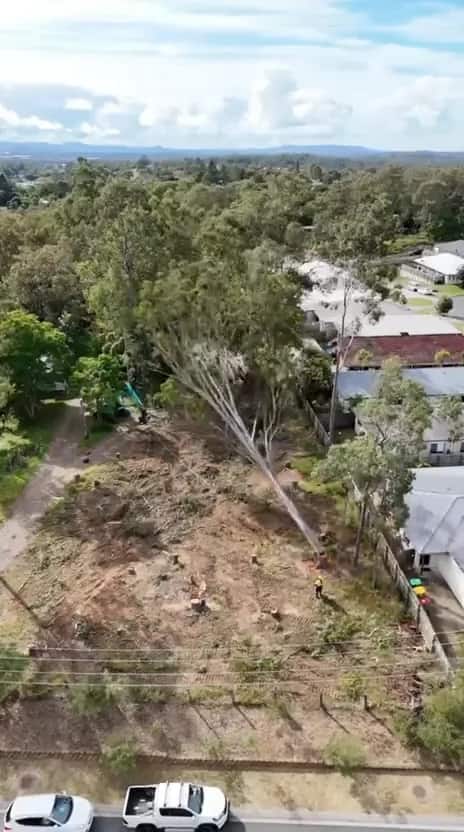
There is no shortcut through that. Two houses on the same street can have different answers.
Size and species can matter too, separately from where the tree is. Some rules key off a trunk circumference measured at a set height, and some list particular species regardless of how big the individual tree happens to be.
Newer estates catch people out most
The single most common surprise is a condition that came with the subdivision rather than with the council's general rules. Retained vegetation, a landscaping condition or a covenant on the title can all outlive the developer.
None of that is obvious from standing in the yard. The tree looks like any other tree, it is on your land, and there is nothing on it to say otherwise.
- Check your contract of sale and any covenant documents that came with the title
- Ask the council whether an approval condition applies to your lot specifically, not just to the suburb
- If the estate has a body corporate or a community management statement, read what it says about vegetation before you get quotes
- Ask the previous owner if you still can, since they may have been told something at settlement
Buying the house does not reset any of it. Whatever applied to the lot generally still applies to you.
How to actually check
- Ring or search Moreton Bay Regional Council with your property address, not just your suburb
- Ask specifically which overlays apply to your lot, and whether the tree you have described needs an approval
- Ask whether the answer changes for a dead or dangerous tree, because it often does
- Get whatever they tell you in writing if you can, or note the date and who you spoke to
- If your property is in Brisbane City Council's area rather than Moreton Bay, ask them instead, because the rules are not the same
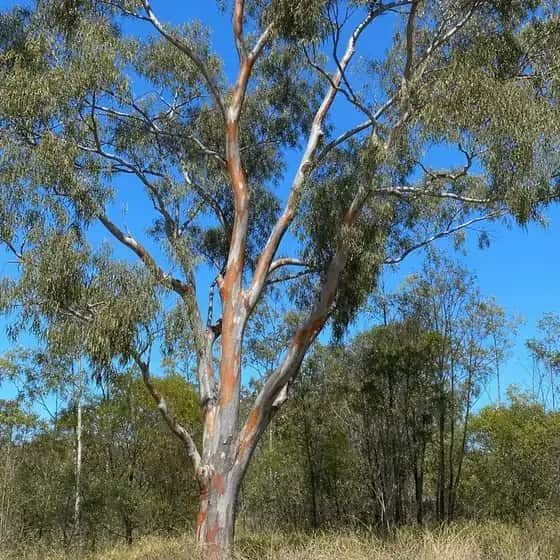
That call takes a few minutes and it settles the thing that matters. It is worth doing before you get quotes, not after, because the answer can change what the job is.
If an approval does turn out to be needed, ask what the pathway looks like while you have them on the phone. How long it usually takes and whether conditions such as replacement planting are typical will tell you whether to plan around a fortnight or a season.
What to have in front of you when you ring
The call goes faster and the answer is more reliable if you can describe the property and the tree precisely. Vague questions get vague answers.
- Your full street address, plus the lot and plan number from your rates notice
- Roughly how far the tree is from the house, the boundary and any waterway or gully
- The trunk circumference or diameter, and a rough height, measured rather than estimated if you can manage it
- The species if you know it, or a photo of the leaves, bark and overall shape if you do not
- What you actually want to do, since removal, a heavy reduction and clearance pruning are not always treated the same way
- Why, particularly if the tree is dead, damaged or leaning over something
Photographs are worth taking before the call, not after. One of the whole tree from the street, one of the base and one of anything that worries you covers almost every follow-up question.
Whose problem it is if it goes wrong
The property owner's. A contractor who removes a protected tree has done a job they were asked to do, and the penalty attaches to the person who owns the land.
That is worth knowing because it changes how you should read a contractor who tells you not to worry about it. Anyone willing to skip the check is not carrying the risk of being wrong.
We will say if a tree looks like it might be protected, and what the check involves. We will not tell you it is fine, because that is not ours to say.
If the tree is an immediate danger
Immediate danger and inconvenient are treated very differently, and the gap between them is narrower than people assume. A tree that has split, dropped a major limb or lifted its root plate is in the first category, and a tree that drops leaves on the pool is not.
- If anything is on or near a powerline, that is triple zero or your electricity distributor, not the council and not a tree business
- If something has come down on the house or is blocking access, the SES on 132 500 handles the emergency make-safe
- Once nobody is in danger, ring the council and describe the tree before booking the full removal
- Photograph the failure and the tree before anything is cut, because it is the evidence for both the council and your insurer
Making a tree safe and removing it are two separate jobs, and they are often two separate conversations with the council. Getting a hung-up limb out of a canopy today does not settle whether the trunk can come out next month.
If the tree is not yours
That is a different system entirely. Disputes about a neighbour's tree in Queensland run through QCAT under the neighbourhood disputes legislation, not through the council.
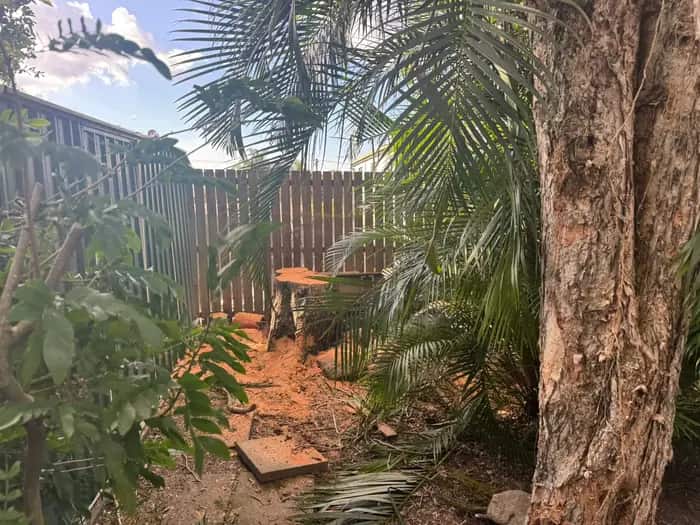
The Queensland Government and QCAT both publish plain-English guidance on where you stand with overhanging branches and what you can do about them. Start there rather than with a contractor, because no tree business can settle a boundary question for you.
Talking to the neighbour first is not just politeness. Most of these are sorted in a conversation, and the ones that are not go much better when you can show you tried.
Common questions
Can I remove a dead tree without council approval in Moreton Bay?
Often the rules treat dead and dangerous trees differently, but that is not a blanket exemption and it is not something to assume. Ring the council, describe the tree, and ask that exact question about your address.
Does a tree lopper organise the council approval for me?
Not usually, because the application relates to your land and your ownership of it. What a good contractor will do is tell you when they think one is needed rather than quietly going ahead.
What happens if a protected tree is removed without approval?
Penalties apply and they sit with the property owner. It is the single strongest reason to spend the five minutes on the phone first, because the check costs nothing and the alternative is not small.
Do I need approval to prune rather than remove a tree?
Sometimes, and it is a separate question worth asking in the same call. Some conditions cover any work on a protected tree rather than removal alone, so describe what you actually want done rather than asking about removal in general.
Does an arborist report help with a council application?
It often does, because it puts the tree's condition in writing from someone qualified to assess it rather than from the owner. Ask the council whether they want one before you commission it, since what they need varies with the reason for the application.