The short version
- Late winter to early spring suits most structural pruning here
- Prune flowering trees right after they finish flowering, not before
- Dead, cracked or hanging wood comes out immediately, season is irrelevant
- Avoid heavy pruning in the peak of summer heat and in the wettest part of the year
- The cut position matters more than the calendar
- A tree seals a wound from the collar, so cutting flush removes the tissue that does the sealing
The general window, and why it is late winter
For most trees in this part of the world, the best time for structural pruning is late winter into early spring. The tree is between growth flushes, the canopy is easier to read without a full head of leaves on it, and the wound has the whole growing season ahead to start closing over.
It also lands well before the storms. Work done in August has months to settle before the weather that would test it arrives.
There is a practical reason as well as a horticultural one. The ground is dry in late winter, so a machine can get down the side of a house without leaving ruts through a lawn that will not recover until spring.
The two stretches to avoid for heavy work are the peak of the summer heat and the wettest part of the year. Heat means the tree is already under stress and losing shade on its own bark, and constant wet means fungal spores everywhere looking for an open wound.
The exceptions that matter
- Flowering trees: prune straight after flowering finishes. Prune before and you cut off the buds that were about to open
- Dead, cracked or hanging limbs: take them out now, whatever the month. A safety problem does not have a season
- Storm damage: same answer, and sooner is better because a hung-up limb can let go without warning
- Frost-tender species: leave them until the cold has passed, because fresh cuts and a cold snap together are hard on a tree
- Palms: not really pruning at all. Dead fronds and seed pods come off, live green fronds stay on
- Trees near powerlines or over a road: whenever the clearance runs out, since that is a safety schedule rather than a horticultural one
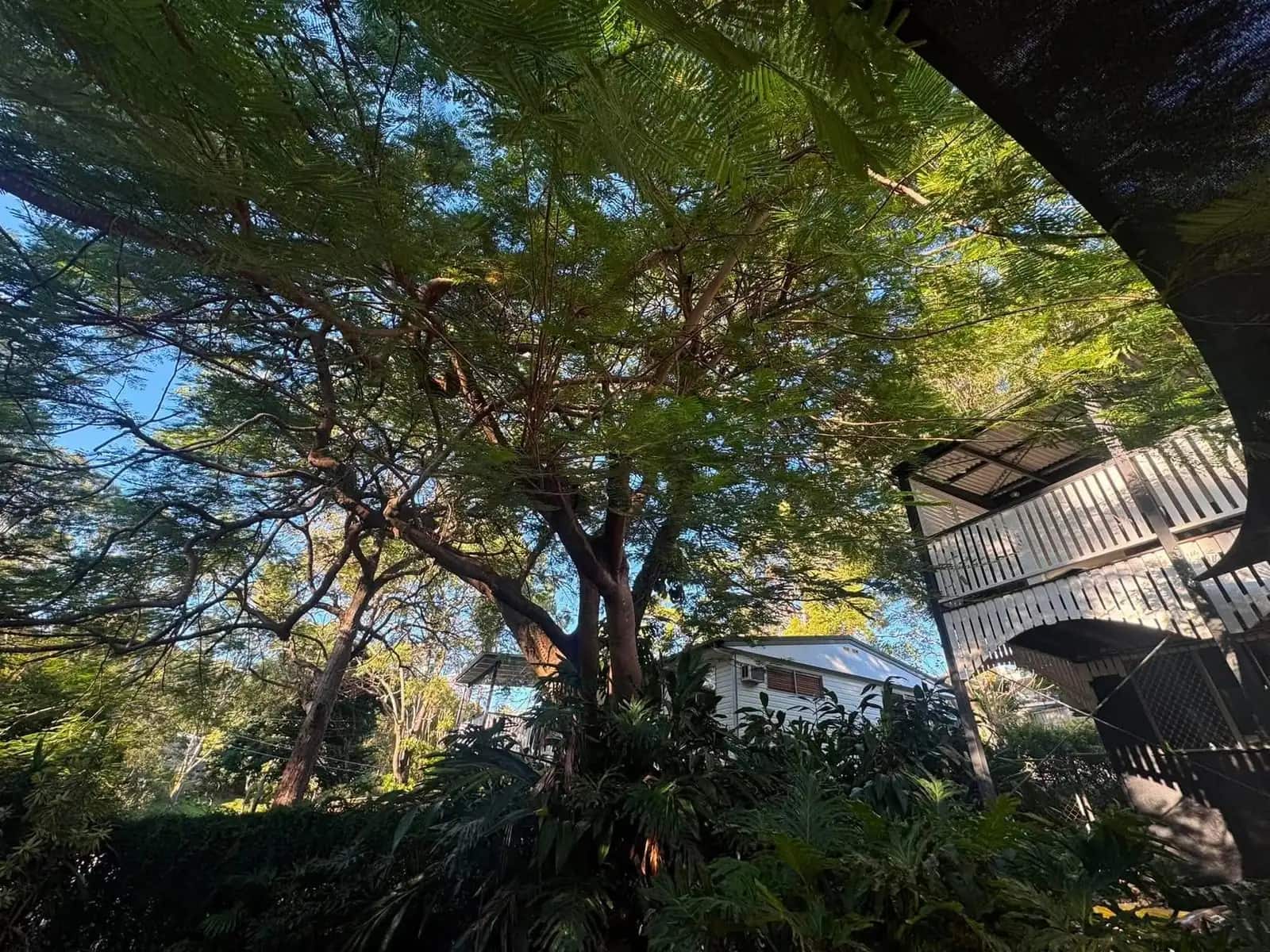
The flowering rule catches people out on jacarandas and poincianas more than anything else. Both set their buds well before they open, so a tidy-up over winter is also a decision to skip the display.
The kinds of pruning, and what each is actually for
Most disagreements about pruning are really people using one word for five different jobs. Asking for the right one gets you the result you had in mind.
- Deadwooding: the dead, broken and hanging material comes out and nothing live is touched. The safest job there is and the one most trees actually need
- Crown thinning: a measured share of the inner growth is removed so wind passes through, without changing the outline of the tree from the street
- Crown lifting: the lowest limbs come off to get headroom over a path, a driveway or a lawn you want to mow
- Crown reduction: the long ends are shortened back to a suitable growth point, which lowers the leverage on the limb and keeps a natural shape
- Clearance pruning: whatever is growing into the roof, the gutter, the fence or a line gets taken back to a set distance
- Formative pruning: light, early work on a young tree to set the structure it will carry for the rest of its life
Topping is not on that list and it is not a kind of pruning. It is cutting limbs off in the middle with no regard for where the tree can regrow from, and it costs the tree years.
What does more harm than the wrong month
Timing is worth getting right, but a tree pruned in the wrong season and cut well will out-recover one pruned at the perfect moment and cut badly.
A tree cannot heal a wound the way skin does. It walls the damaged wood off and grows new tissue over the top, and it can only do that from the collar of slightly swollen tissue where a branch meets the trunk.
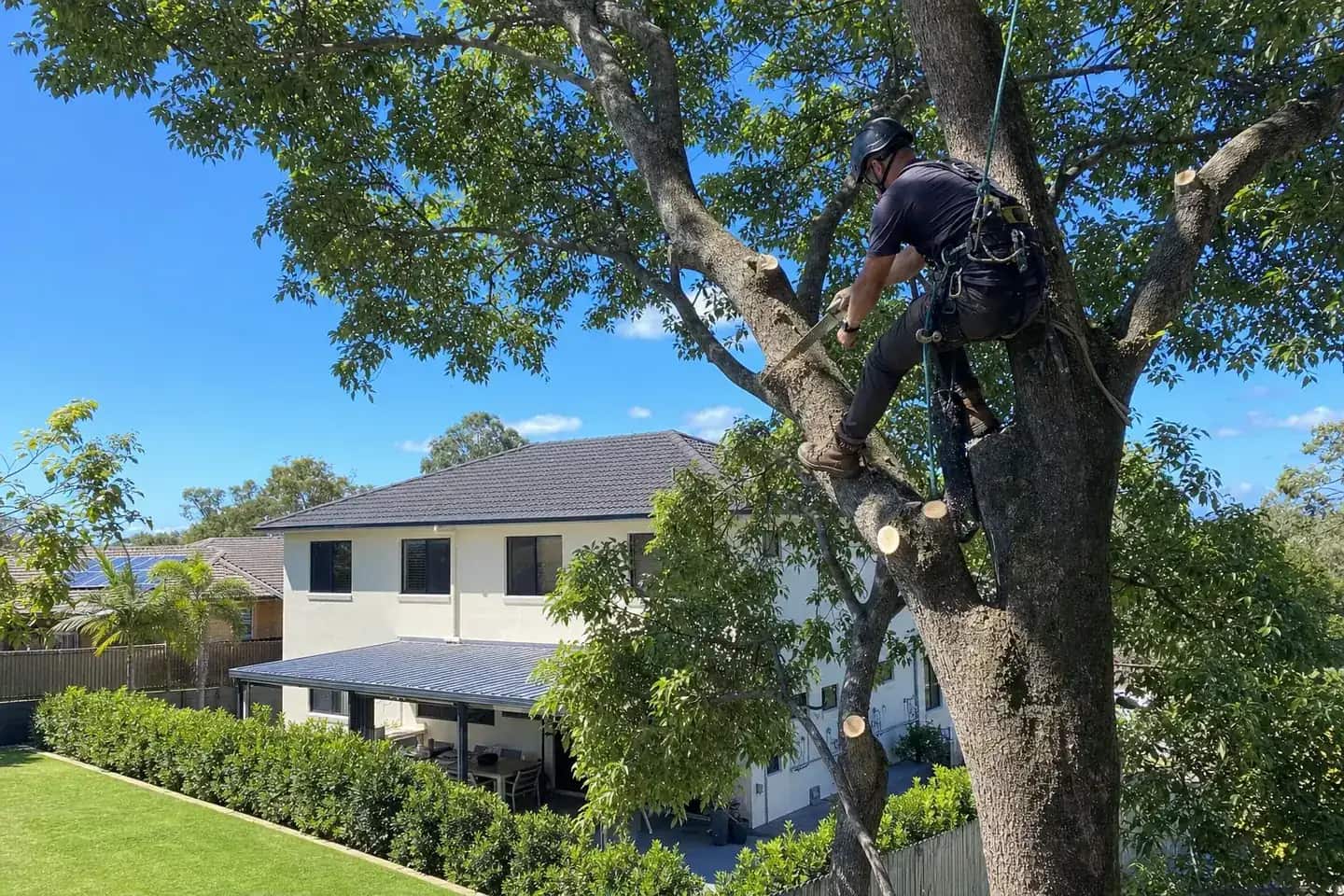
Cut flush to the trunk and you remove the collar. The tree then has nothing to grow the seal from, and the wound stays open for years while decay works its way in.
The other common mistake is taking too much at once. A tree funds next season's growth from what its leaves make this season, so stripping most of the canopy in one go leaves it running on reserves.
Tearing is the third one, and it is the easiest to avoid. A heavy limb cut in one pass will fold and rip a strip of bark down the trunk on its way, which is why the cut gets undercut first and the weight comes off in pieces.
The pruning that pays for itself is done early
Almost every expensive tree problem in a suburban yard was a cheap decision fifteen years earlier. A tree that grew two competing leaders as a sapling is the tree with the split union you are now worried about.
Formative pruning is small work. It means choosing one leader, taking off the branch that is going to cross and rub, and keeping the low growth in check while the wounds are still the width of a finger.
- Pick a single central leader early and remove the rival before it thickens
- Take out branches that cross or rub, because the bark wears through and lets decay in
- Keep any one limb from getting as thick as the stem it comes off
- Do it in small amounts over several years rather than in one hard go
The same logic applies to a tree you have just planted. Two minutes with secateurs in year three is the alternative to a crane in year thirty.
Palms are a different job entirely
A palm is not a tree in the way the rest of this page uses the word. It has one growing point at the top, no ability to grow new wood over a wound, and no branches to reduce.
That means the only useful work is taking off dead and hanging fronds, seed heads and old flower stalks. Cutting live green fronds off to make it look tidy removes the food the palm is running on and does nothing for its safety.
Stripping a palm back to a handful of upright fronds is the palm version of topping. It is common, it is popular, and it makes the palm weaker and more likely to fail in wind.
The seed heads matter more than most people expect. A cocos in full seed drops thousands of them, and the ones that miss the ground come up as seedlings in every garden bed within throwing distance.
How often it needs doing
Done properly, most established trees need attention every few years rather than every year. A clearance prune off a roof or a powerline might come around faster depending on how quickly the species grows.
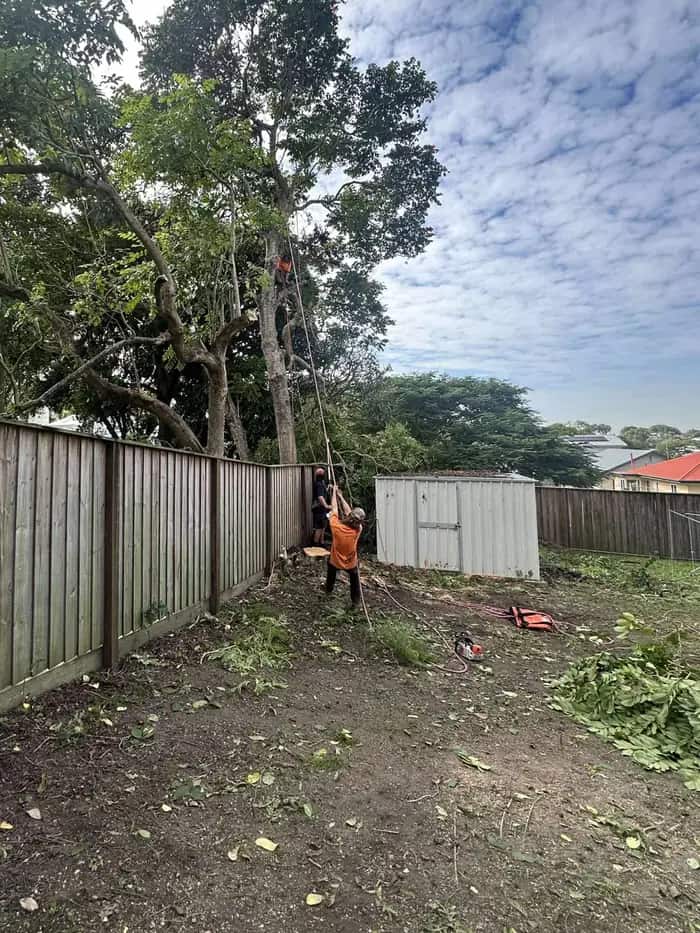
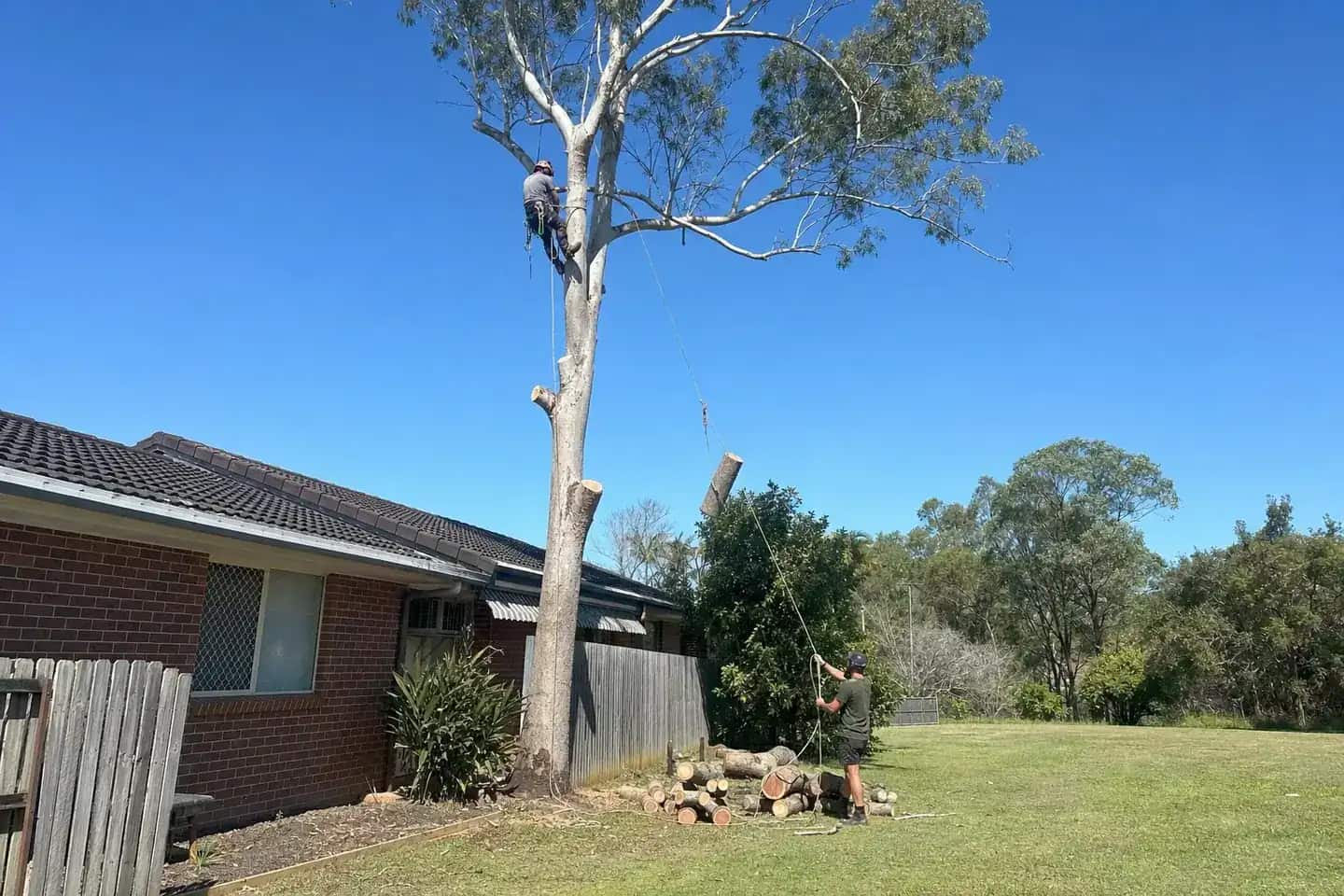
Where the tree sits changes the schedule more than the species does. Anything growing over a fence, a shed or a neighbour has to come out in controlled pieces, and that is worth doing before the limb gets big enough to need rigging.
If a tree seems to need doing every single year, that is usually a sign it was topped at some point and is now producing regrowth faster than it otherwise would.
Common questions
Can I prune a tree in summer in Queensland?
Light work and dead wood, yes. Heavy structural pruning in the peak of the heat is harder on a tree, because it loses shade on its own bark and has to recover in the most stressful part of the year.
How much of a tree can be taken off at once?
Less than people expect. The more of the canopy that goes in one visit, the more the tree is running on stored energy rather than what it is making, and a heavy reduction is better split across two visits a season or more apart.
Does sealing a pruning cut with paint help?
No. Wound paints were standard practice decades ago and the research went the other way. A clean cut at the collar, left open, seals faster than a painted one.
Why did my tree grow back thicker after it was cut?
That is the standard response to a heavy cut in the wrong place. The tree pushes out a mass of upright shoots from below the wound, and because they are attached to the outside of old wood rather than joined into it, the tree ends up denser and weaker than before.
Is there a season when a tree should not be pruned at all?
There is no month when dead or dangerous wood should be left in a tree. For structural work, the peak of summer heat and the wettest stretch of the year are the two periods worth avoiding if the job can wait.