The short version
- Roots spread wide and shallow rather than deep, so most of the damage is near the surface
- A root in a sewer line is usually a symptom of a pipe that was already leaking
- The pipe is a plumber's job and the tree is ours, and both halves have to be done
- Lifted concrete is often the cheap problem, and a moving root plate is not
- Figs, camphor laurels and umbrella trees cause most of the calls in this corridor
- Cutting a big structural root can leave a stable tree unstable, which is the whole risk
- Cracking in walls and floors is a question for an engineer, not for a tree crew
What roots actually do underground
Most people picture a root system as a mirror image of the tree, driving straight down. It is closer to a dinner plate than a carrot, spreading wide and staying in the top layer of soil where the water and the air are.
That is why the damage turns up where it does. Paths, driveway edges, garden walls and shallow pipe runs all sit in exactly the band of soil the tree is using most.
Roots also have no plan. They grow where conditions are good and stall where they are not, which means a root will run for years along a loose trench backfill or under a warm damp slab edge and ignore the compacted clay a hand's width away.
Nothing a root does is an attack on your house. It is a plant following moisture and air, and the reason it ends up in the wrong place is usually that we put the moisture and the air there.
Roots in the sewer and stormwater
A blocked drain with roots in it is the most common version of this problem in the older estates through Caboolture, Morayfield and Deception Bay. The pipes in that era are often terracotta in short lengths, and every join is a potential way in.
The order of events matters more than most people expect. A joint moves or cracks slightly, water and vapour escape, roots grow toward the leak, and then the root thickens inside the pipe and finishes the job.
- Drains that gurgle, back up or run slow, and the shower and the gully outside going at the same time
- A patch of lawn over the pipe run that stays greener and longer than the rest of the yard
- A smell near an outside gully after heavy rain
- A drain that clears when it is rodded and then blocks again on the same cycle every year or two
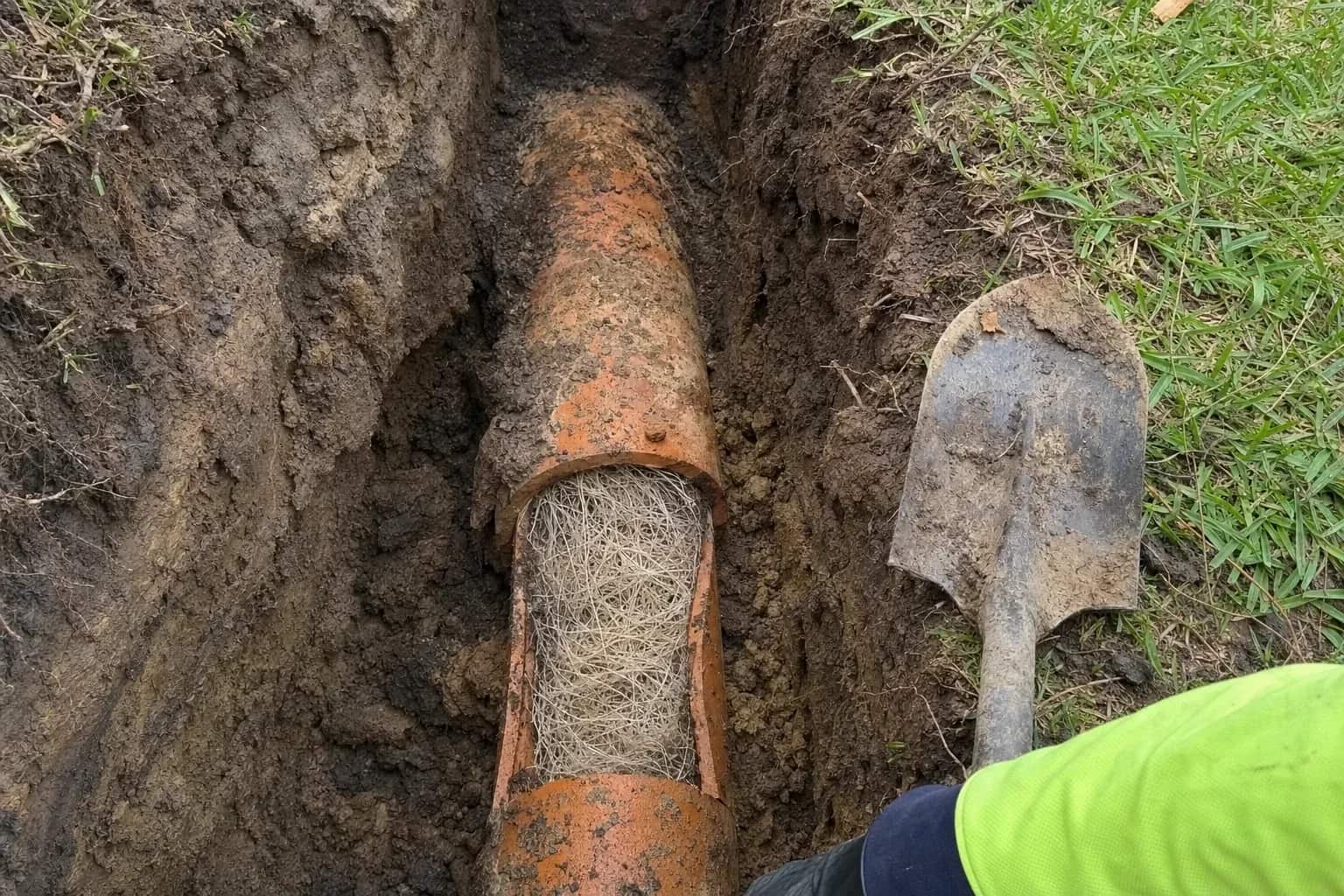
This is the point where we tell people the honest split. The pipe itself is a plumber's work, with a camera to find it and either a repair or a reline to fix it, and cutting the roots out without fixing the pipe just resets the clock.
Our half is the tree. Whether the root feeding that pipe can be severed, whether the tree stays safe without it, and whether the species is going to be back in the same pipe next year regardless.
Lifted driveways, paths and slab edges
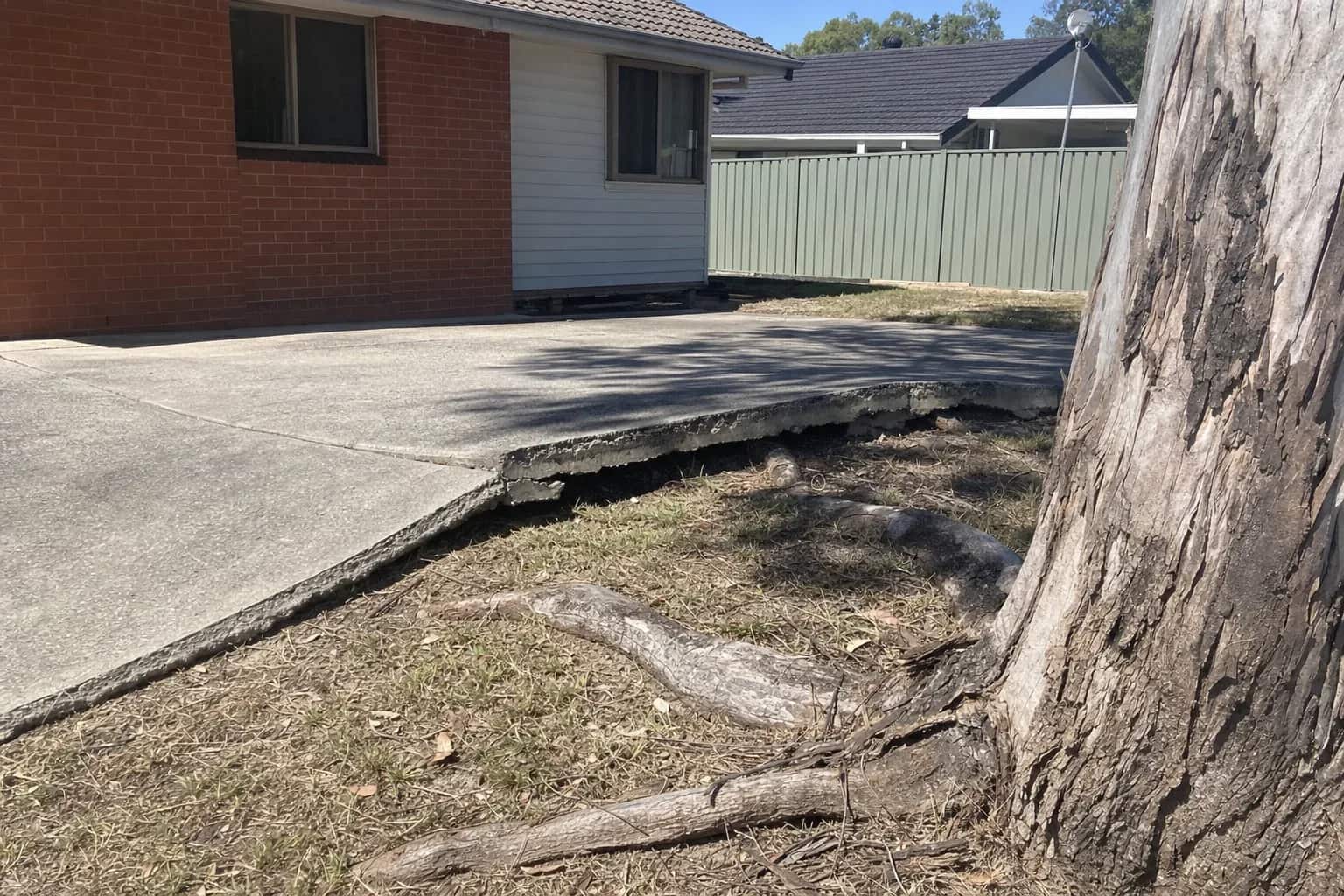
A root does not punch through concrete. It gets under it while it is thin, then thickens season after season, and the slab gives way where it is weakest.
Which is why the lifting shows up at joints, edges and crack lines rather than in the middle of a sound pour. A path laid on sand with no reinforcement will lift long before a properly built driveway does.
- A ridge or a step in a path, usually running out from the tree rather than across it
- Cracks that open along the line of a root you can see or feel underfoot
- Pavers or a driveway edge tilting while the rest of the surface stays flat
- A retaining wall or a garden edge bowing out on the tree side
- Fence posts pushed out of line near the trunk
Lifted concrete is annoying and it is a trip hazard, and it is usually the cheaper half of the story. It is worth checking at the same time whether the root plate itself has moved, because soil that is domed or cracked on one side of the trunk is a different conversation entirely.
Cracks in walls, and where our advice stops
There is a second way trees affect buildings around here, and it has nothing to do with a root touching anything. A lot of this corridor sits on reactive clay that swells when it is wet and shrinks when it dries.
A big tree draws a great deal of moisture out of the ground close to it, so the soil on that side of a house can behave differently to the soil on the other side. Removing a large tree can shift the same soil the other way as the moisture comes back.
Cracking in brickwork, doors that have stopped closing or floors that have gone out of level are questions for a structural engineer, not for a tree crew. Anyone who looks at a crack and tells you the tree did it, without anyone having looked at the footing or the soil, is guessing with your money.
We are happy to say what the tree is doing and what removing it would change. What we will not do is diagnose a building.
The species behind most of these calls
Any tree can find a leaking pipe. A handful of species turn up again and again in this corridor because they are vigorous, shallow rooted and were planted far too close to something.
- Figs, including the Moreton Bay fig and the small-leaf figs sold as hedges, which build enormous surface roots and buttresses
- Camphor laurel, an old weed species in this part of the world with an aggressive spreading root system
- Umbrella tree, both the garden variety and the self-sown ones, which get into pipes and under slabs out of all proportion to their size
- Chinese elm, fast, shallow and very hard to discourage once it is established
- Poinciana, which lifts paths and driveways with shallow roots that spread much wider than the canopy
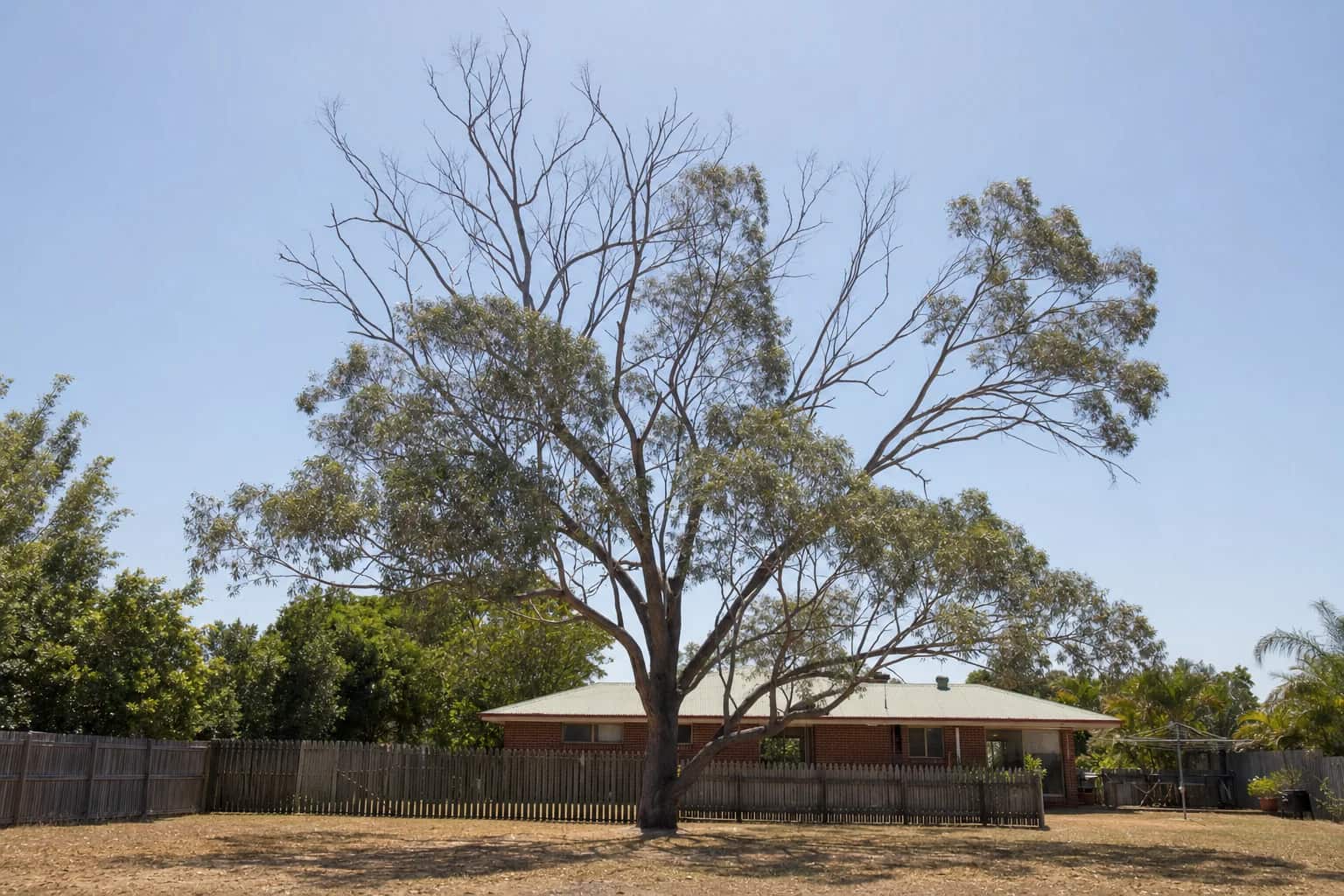
- Large eucalypts planted close to a house, less for the pipes than for the moisture they pull out of clay
- Golden cane and cocos palms in clumps, which are not structural offenders but which pack a surprising root mass against a fence or a pool shell
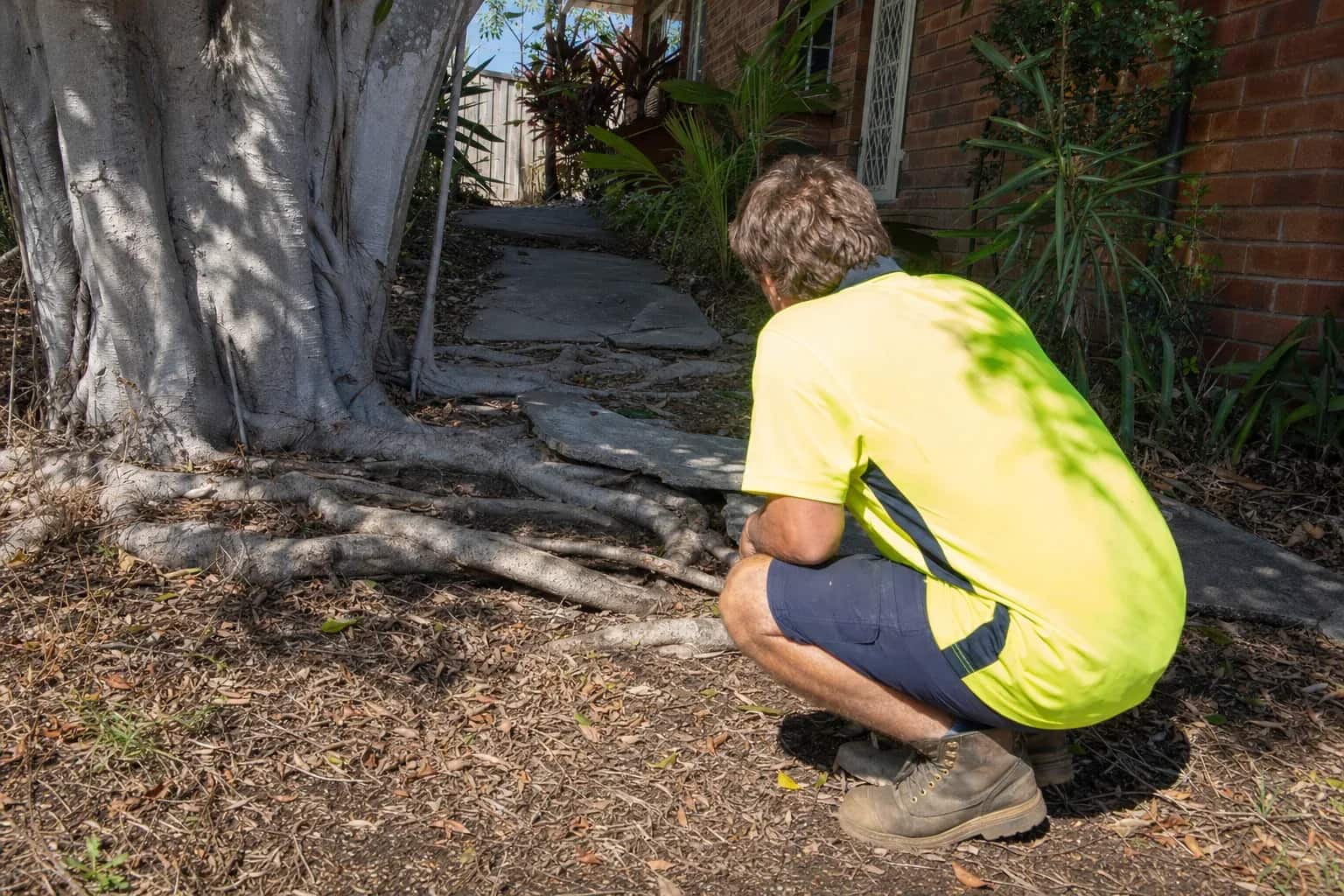
Species tells you what to expect, not what to do. A young umbrella tree against a sewer line is a straightforward removal, and a mature fig lifting a path is a careful decision with a lot more on either side of it.
Which roots can be cut, and which cannot
This is the question that actually decides the job, and it is why root damage is worth a look from someone who works on trees rather than only from the trade repairing the damage. A tree stands up on a few large structural roots near the trunk and feeds itself with the fine ones further out.
Cut the fine roots out at a distance and a healthy tree generally shrugs it off. Cut a major structural root close to the trunk and you can leave a tree that looks completely normal and is no longer safe in a storm.
- Where the root sits relative to the trunk matters more than how thick it is, because the closer in it is, the more of the tree's stability it carries
- Roots on one side only is worse than the same amount spread around, since the tree loses its anchorage in a single direction
- Cutting cleanly with a saw beats tearing roots out with a machine, which damages far more than the piece you wanted gone
- What has already been cut counts too, so a tree that lost roots to a pool or a shed slab years ago has less left to give
- A tree that has just had significant roots removed is worth watching through the first storm season rather than forgetting about
There is also the option people rarely ask about, which is doing nothing to the tree at all. Ramping a path over a root, relaying a section in pavers so it can be lifted again, or rerouting a pipe away from the tree all leave the tree intact.
Root barriers, and what they will not fix
A root barrier is a solid panel set vertically in a trench between the tree and whatever you are protecting. Put in before the roots arrive, it works by sending them down and around rather than by stopping them.
Put in afterwards it is a much smaller promise. Installing one means cutting every root that already crosses the line, which brings you straight back to the question in the section above.
- Best value at planting time, or when a path, driveway or pipe run is being rebuilt anyway and the trench is already open
- Of no use at all against a root that is already inside a pipe
- Not a substitute for repairing the pipe, since roots follow the leak and will find their way round the end of a short barrier
- Chemical root killers poured down a drain treat what is in the pipe and do nothing about the hole it came in through
When the tree is the thing that has to go
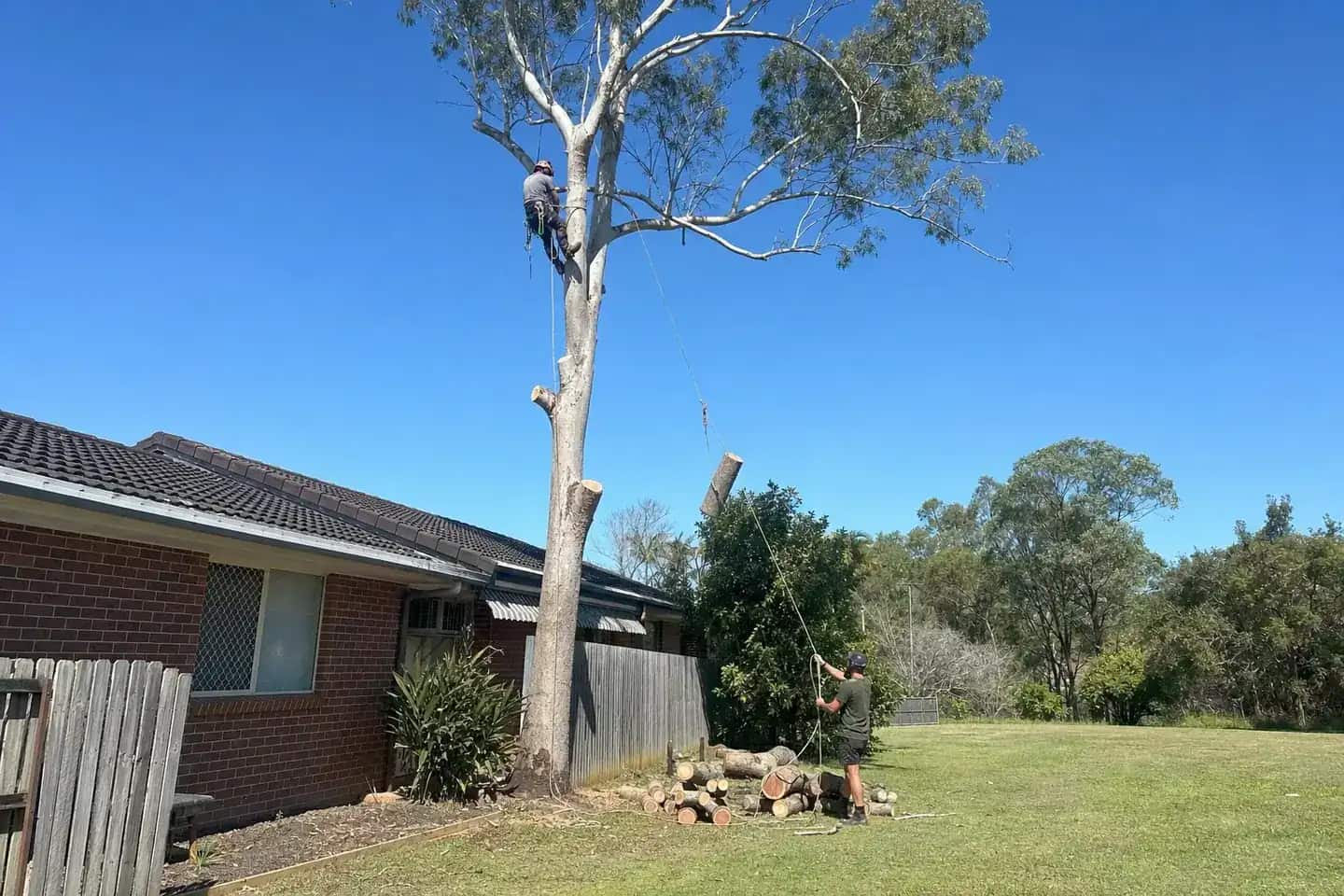
Sometimes the sums are obvious. A self-sown umbrella tree in a fence line, a camphor laurel over a sewer run, or a palm clump against a pool shell are not trees anyone is going to engineer a solution around.
Where it gets harder is a good tree that is doing real damage. That is worth weighing properly, because shade in this climate is worth something and a mature tree cannot be put back.
- Check with Moreton Bay Regional Council whether the tree is protected at your address before you plan anything, since damage to a structure is not an automatic exemption
- Work out whether the repair can be done without touching the structural roots, which is often the whole decision
- If the pipe is the problem, get it camera inspected first so you know what you are actually fixing
- Grind the stump rather than leaving it if the spot is going back to lawn or garden, and remember the root system stays in the ground and breaks down slowly
- Replant somewhere sensible, because the reason most of these trees are a problem is where they were put rather than what they are
Removal does not take the roots out with it. The stump can be ground out below the surface, and the wider root system stays where it is and decays over the following years.
What to do next
- Photograph the damage, the tree and the base of the trunk, and note how far the tree is from what it is affecting
- Get a plumber with a camera onto any drain problem before anyone cuts a root, because the pipe decides most of the rest
- Get an engineer involved if the cracking is in the building rather than in a path or a driveway
- Ring the council about protection at your address if removal or major root work looks likely
- Have someone look at the tree before concrete gets broken out, since the roots you find under it are the ones that decide whether the tree stays
We will tell you when a root can come out and when it cannot, and we will say so if the fix is a plumber rather than us. There is no sense removing a tree to solve a problem that a pipe repair was always going to solve.
Common questions
Can I just cut the tree root that is lifting my driveway?
Sometimes, and it depends entirely on which root it is. Fine roots well out from the trunk can usually be cut cleanly without much effect, while a large structural root close to the trunk can be carrying the tree's stability. Have the base of the tree looked at before the concrete comes up, because once the root is cut the decision has been made.
How do I know if tree roots are in my sewer pipe?
The usual signs are drains that run slow, gurgle or back up, a strip of lawn over the pipe run that stays greener than the rest, and a blockage that clears when it is rodded and returns on the same cycle. A plumber with a camera will confirm it and show you where the roots are getting in, which is what decides the repair.
Will removing the tree stop the damage?
It stops the root growing, and it does not undo what has already happened. The pipe still needs repairing, the lifted concrete still needs relaying, and the existing roots stay in the ground and break down over the following years. On reactive clay, taking out a large tree can also change how the soil around a house behaves, so it is worth understanding before rather than after.
How far from the house should a tree be planted?
There is no single number that covers it, because it depends on the species, its mature size, the soil and what is buried nearby. The practical version is to match the tree to the space you actually have, keep vigorous shallow-rooted species well away from pipe runs and slab edges, and check where the services run before planting anything large.
Do root killers down the drain work?
They kill what is inside the pipe and they do nothing about the crack or the joint the roots came in through. That is why a treated drain so often blocks again on the same cycle. It is a way of buying time, not a repair.